

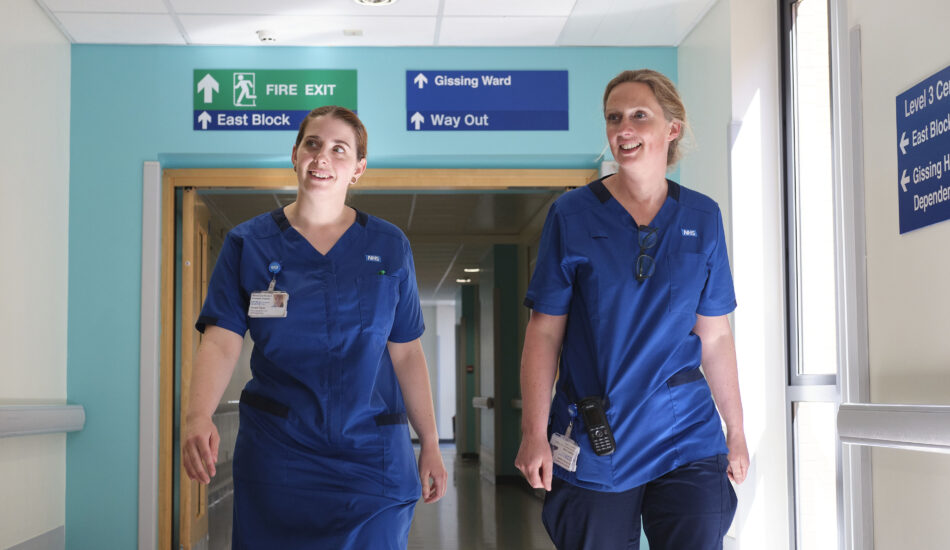
A mixture of paperwork and different online systems means a considerable amount of time is spent either filling in paperwork or logging into various systems for nurses such as Hayley Budrey, a stroke alert nurse and deputy sister for neurosciences based at the NNUH.
Potential stroke alerts come through to a Dect phone mainly from A&E, ambulance crews, wards and GPs and the stroke alert nurses go to meet the patient to assess them. Sometimes there is time to check their GP notes on the shared care record before the patient arrives at the NNUH, but often the patient is already in A&E.
Hayley and the Stroke SPR complete initial recordings on a detailed Stroke Assessment Proforma. On paper, these cover everything from the Pre-Admission Modified Rankin Scale to Level of Consciousness, NIHSS, dysarthria, visual fields plus neurological, limb and general examination, initial management plan, family discussion, consent, screenings, and so on. The 16-page Proforma, recently updated and streamlined, has been developed by the stroke team to be comprehensive but targeted and easy to complete and read.
However, it takes time, and if the patient is admitted there are additional notes and forms to complete. Some tasks are system-based, such as booking bloods and scans, plus if the patient has come via A&E their info needs updating on the Symphony system.
A shortage of computers and frequent problems accessing different systems adds to the frustration, although Hayley says the team is used to working with the challenges. This can mean returning to A&E to complete records because of log in issues in the ward.
“There is a lot of running around,” she says, adding that sometimes nurses have to hand over some of their patients while they complete all the essential paperwork.
The EPR will streamline many of the processes, bringing a paperlite system and eliminating the need to log into so many different systems. With a stroke patient, speed is vital and the quicker that tasks can be carried out, the quicker the right treatment can be started.